



The Lonto Community Health Centre in Ghana’s Northern Region is operating under dire circumstances that compromise its ability to deliver essential healthcare services. Inside the facility, a broken delivery bed and a lack of basic sanitation highlight the urgent need for support.
Magdalene Demyomah, a Registered Community Health Nurse at the center, has been working there for over a year. She described her initial reluctance about transferring to Lonto, saying, “I did not want to come because I was wondering what kind of village I was going to. But I am serving humanity, and so I had no option but to come and work here.” Her commitment, however, has not shielded her from confronting the clinic's significant shortcomings.
The clinic lacks a functioning washroom. “We do not have washrooms. So, when people come here, they have to go into the bushes around the clinic to defecate,” Demyomah said. This situation is not only uncomfortable but poses health risks. She added, “This increases the risk of diarrhoea, cholera and other similar diseases in the community because we have no option but to go into the bush.”
Emergency care is another significant issue. The clinic does not have an ambulance, forcing families to rely on tricycles, known locally as “motor kings,” to transport patients in critical condition to Kpandai District Hospital or to Tamale. “We do not have an ambulance to transfer emergency cases,” Demyomah said. “This is very appalling.”
Supply chain delays further complicate care delivery. Demyomah noted that sometimes essential medicines do not arrive on time, resulting in patients having to purchase their own. “When those medicines are unavailable at the facility, we are sometimes left with no option but to ask patients to buy them elsewhere,” she said.
The facility also lacks designated wards for different patient demographics. “We do not have separate wards for females, males or even children. Everyone is put in the same ward at a time, which is very bad,” Demyomah explained. This arrangement deters many from seeking treatment, particularly in a community where teenage pregnancy is on the rise.
Related News
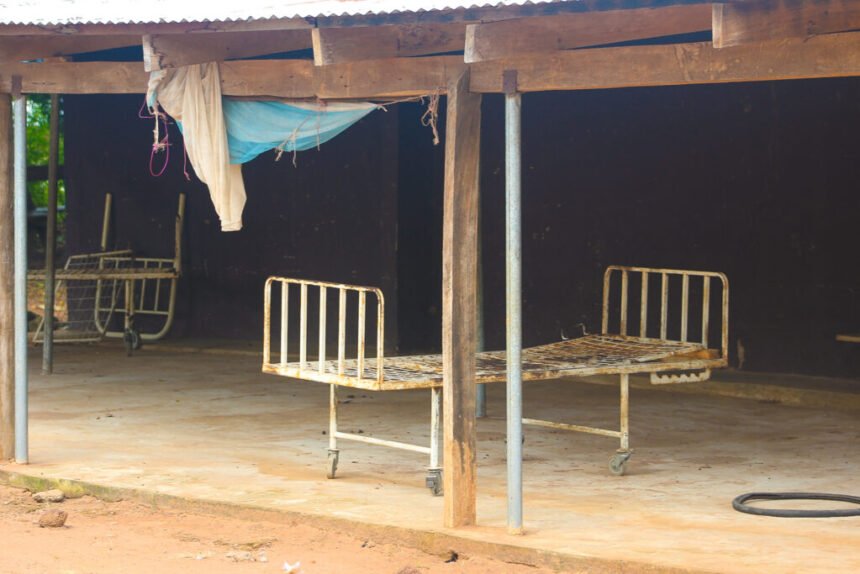
Demyomah reported a troubling trend: “According to my records for Lonto, a lot of my patients that come in are teenage pregnant girls.” This demographic faces unique challenges, compounded by limited medical resources. The only delivery bed at the health center is broken, complicating the process for pregnant women seeking assistance. “The delivery bed is even broken. Part of it is broken and has gone inside,” Demyomah said, detailing the logistical nightmare of attending to multiple women in labor simultaneously.
A visit to the health center reveals an environment struggling to maintain basic hygiene. Unused metal beds are left outside, while cobwebs adorn the walls of consulting rooms. Inside, beds lack sheets, and scattered items indicate a scarcity of storage space.
The Lonto Community Health Centre, staffed by five nurses, stands as a stark example of healthcare inadequacy in rural Ghana. The challenges faced by Demyomah and her colleagues underscore a broader systemic issue affecting health facilities across the region. A faded signpost marks the clinic’s entrance, hinting at the struggles within.
Demyomah's dedication persists despite these hardships. She has witnessed firsthand the consequences of insufficient infrastructure on patient care. “When pregnant women come in, it is very difficult to attend to them,” she said. The broken delivery bed is more than just a piece of equipment; it symbolizes the urgent need for investment in healthcare facilities that can adequately serve their communities.



The stories emerging from Lonto echo a call for action. As healthcare workers continue to serve in challenging environments, the need for better resources becomes increasingly apparent. The Lonto Community Health Centre is a microcosm of the difficulties facing many healthcare providers in rural areas, where the gap between expectation and reality is stark and pressing.
According to Joy Online.